Interoception & emotional regulation in autism
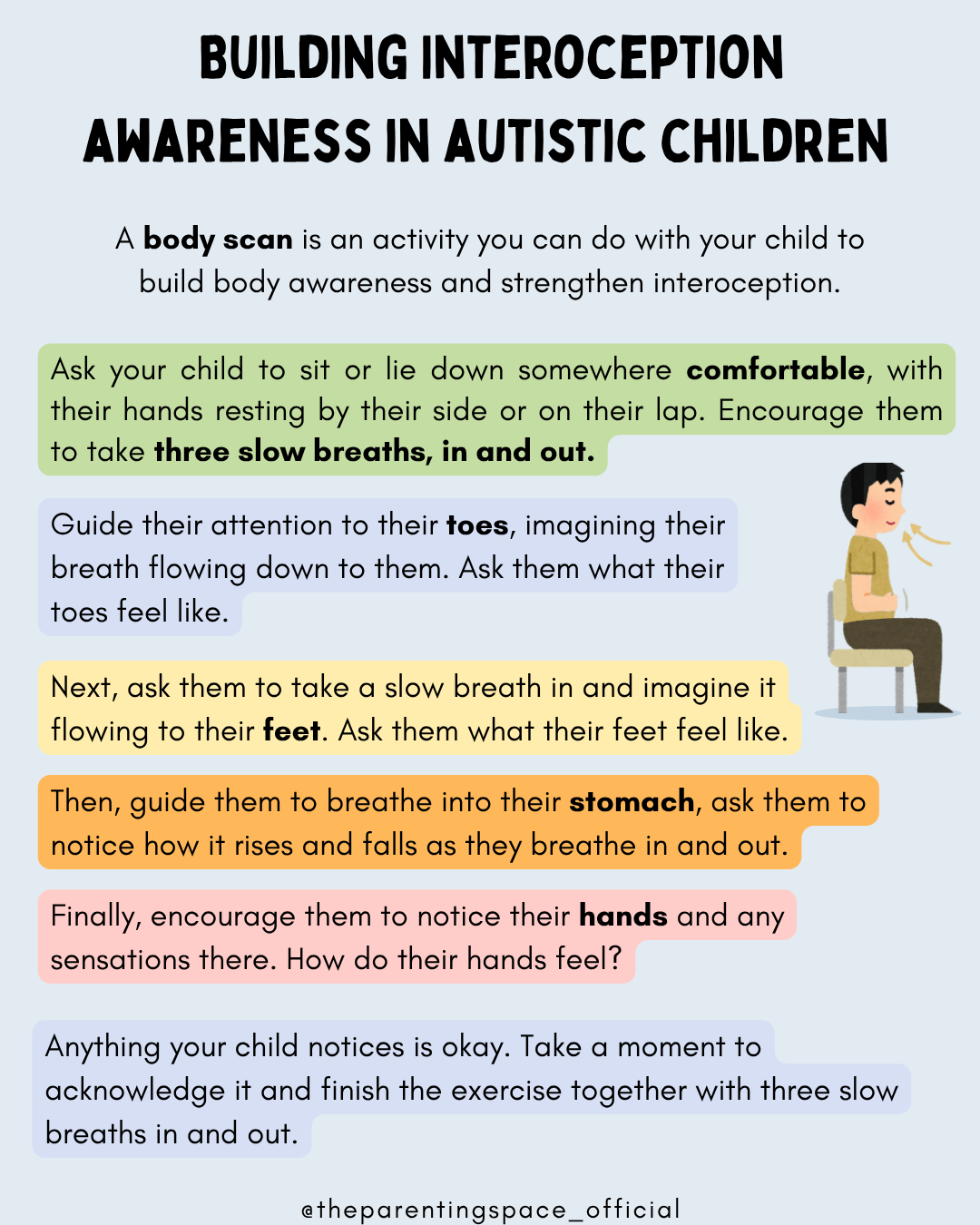
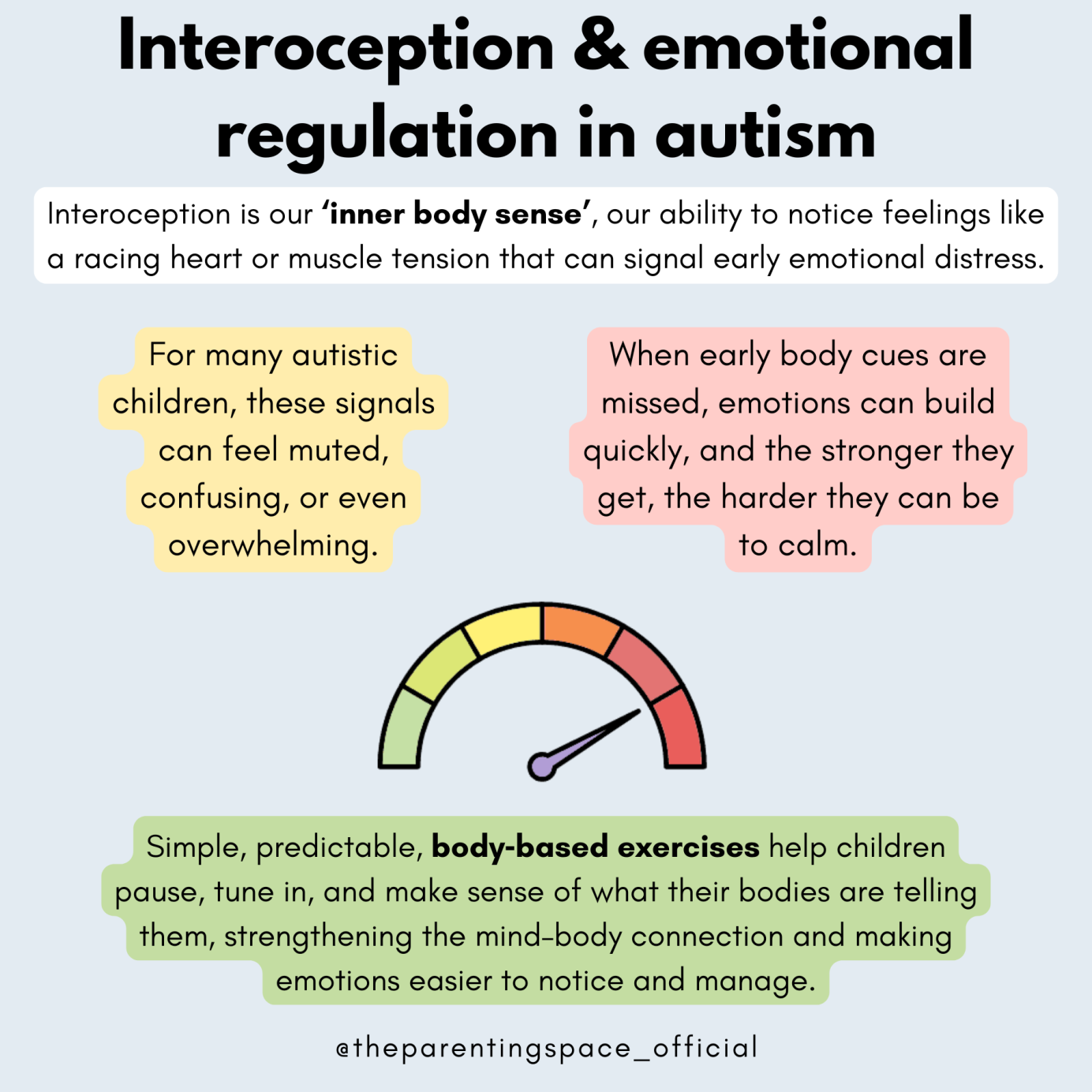
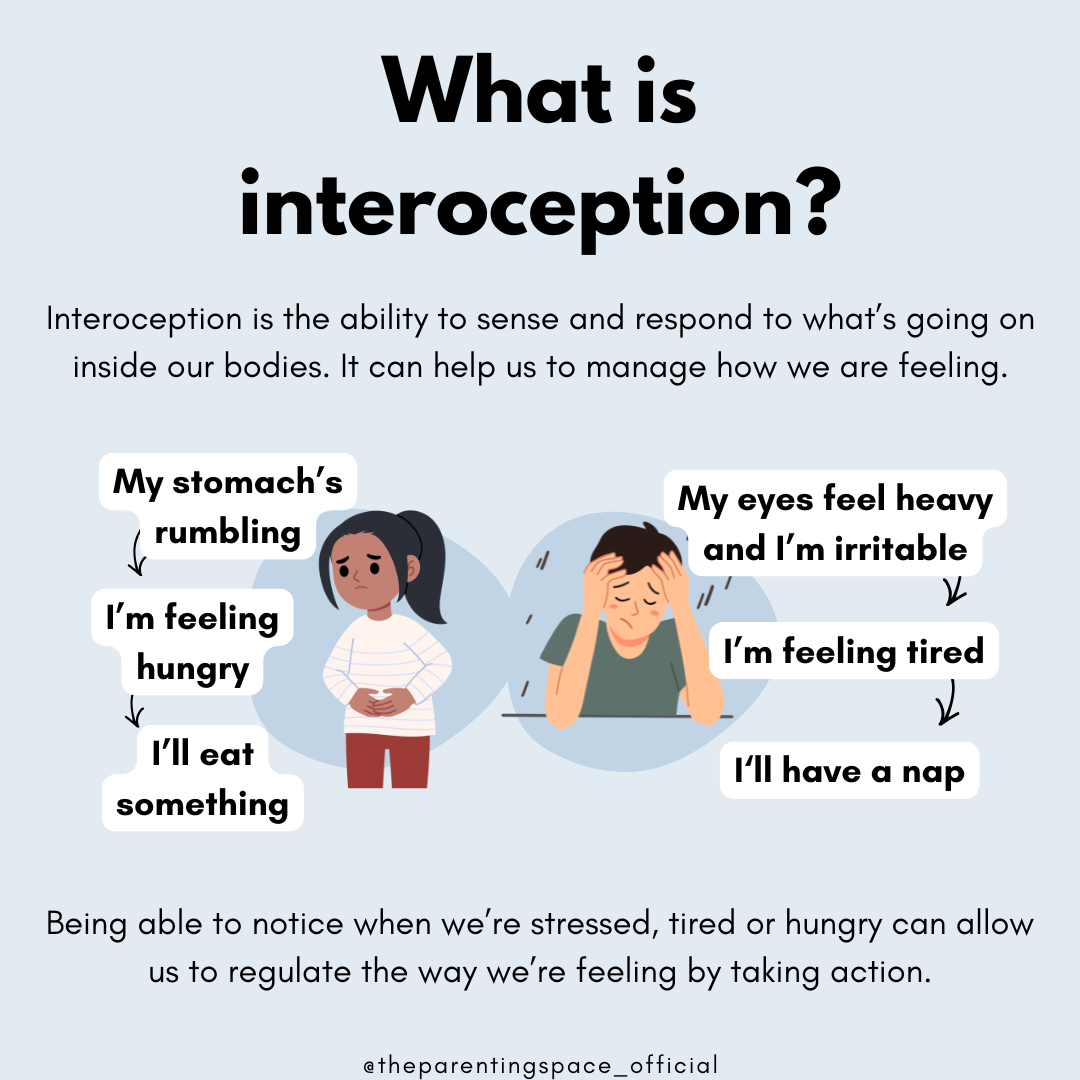
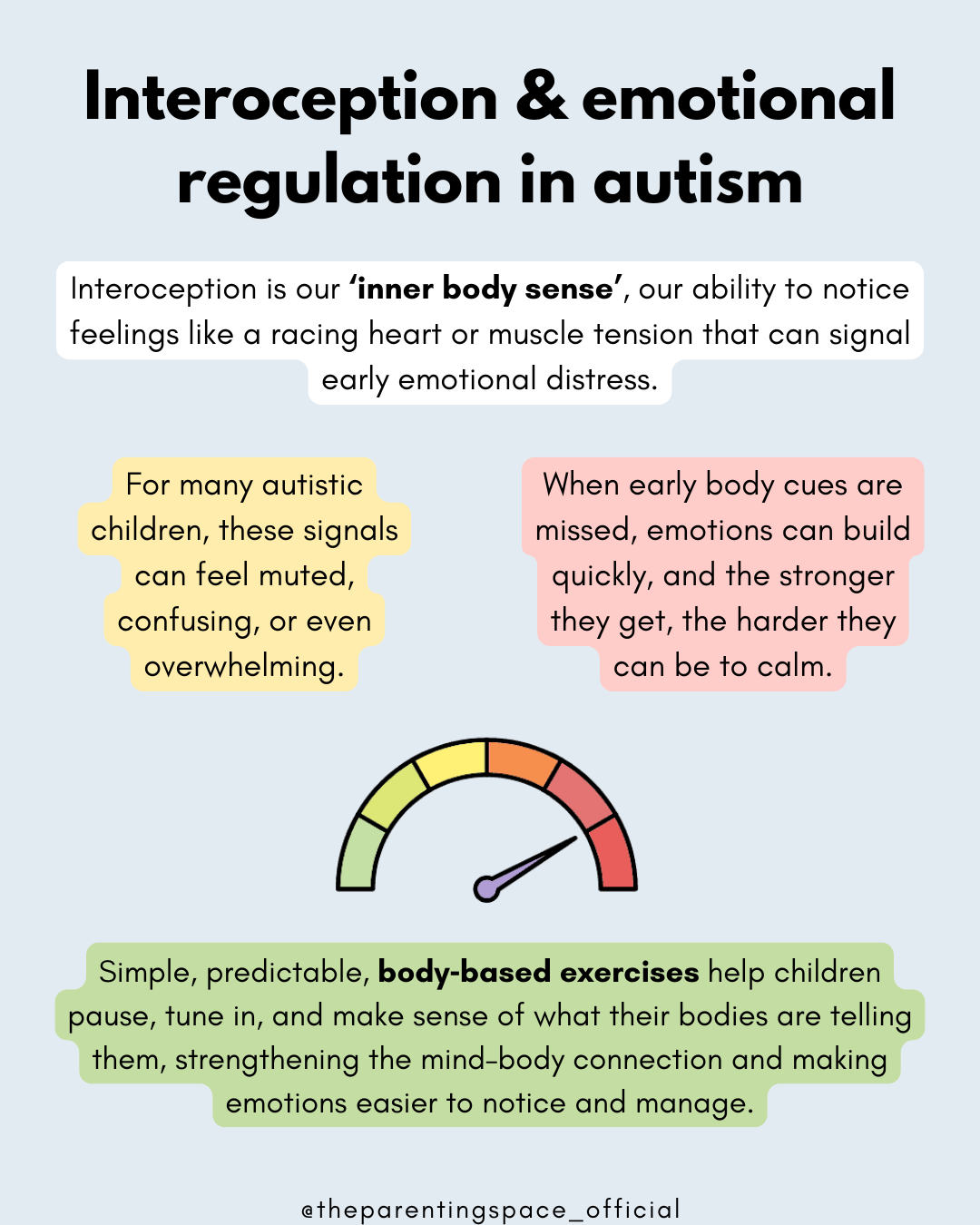
Interoception is the ability to notice and respond to signals from inside our bodies, such as hunger, tiredness, or stress. Recognising these body cues helps us understand how we are feeling and take action, like eating when we are hungry or resting when we are tired. Developing interoception can support emotional awareness and self-regulation.
Interoception is the ability to notice and respond to signals from inside our bodies, such as hunger, tiredness, or stress. Recognising these body cues helps us understand how we are feeling and take action, like eating when we are hungry or resting when we are tired. Developing interoception can support emotional awareness and self-regulation.