
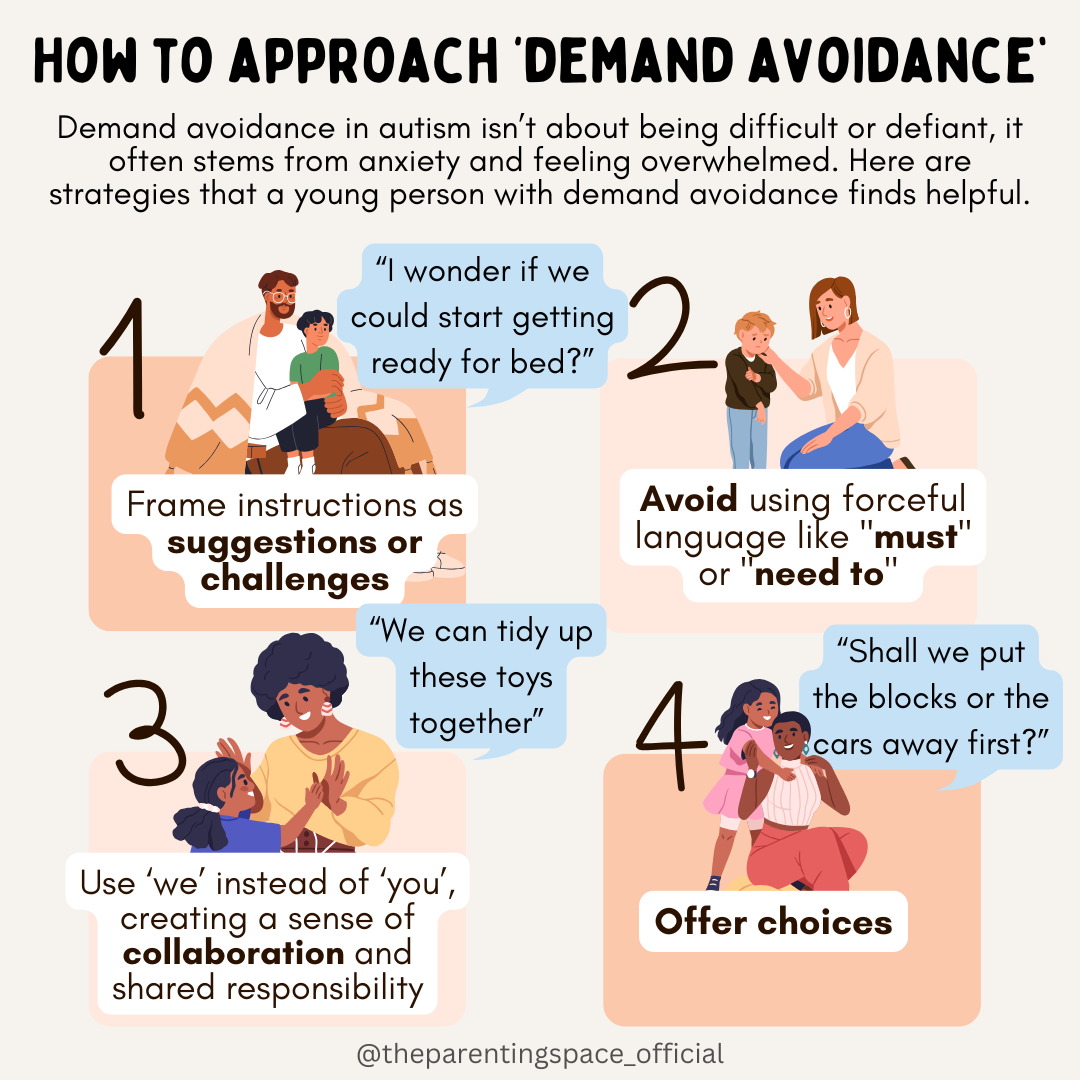
Demand avoidance in autism is not about being difficult or defiant. It often stems from anxiety and feeling overwhelmed. Helpful approaches include using “we” instead of “you” to create collaboration, framing instructions as suggestions or challenges, offering choices, and avoiding forceful language such as “must” or “need to.”

How to approach demand avoidance

This post explains that demand avoidance in autistic young people is often linked to anxiety and feeling overwhelmed, not defiance. It suggests approaching tasks in a collaborative way by offering choices, using “we” instead of “you,” avoiding forceful language, and framing instructions as gentle suggestions or challenges.

NADINE (PARENT + PRACTITIONER)