Routines

Creating a visual timetable together can help you and your child to feel calmer and more in control of daily routines.

Creating a visual timetable together can help you and your child to feel calmer and more in control of daily routines.

Ruby (practitioner)

Roles and Responsibility

Giving your child responsibilities can help develop skills later on in life. Everyone can help out, no matter what age.

Giving your child responsibilities can help develop skills later on in life. Everyone can help out, no matter what age.

Annie (practitioner)

Parental responses to child anxiety

As parents, we often naturally want to shield our kids from distress, sometimes leading to avoiding challenging situations. Whilst this might offer short-term relief, it can limit their growth in facing and overcoming anxieties. Sometimes, supporting them to gradually face their fears can be the best way to help them to develop confidence and coping skills.

As parents, we often naturally want to shield our kids from distress, sometimes leading to avoiding challenging situations. Whilst this might offer short-term relief, it can limit their growth in facing and overcoming anxieties. Sometimes, supporting them to gradually face their fears can be the best way to help them to develop confidence and coping skills.

Ruby (practitioner)

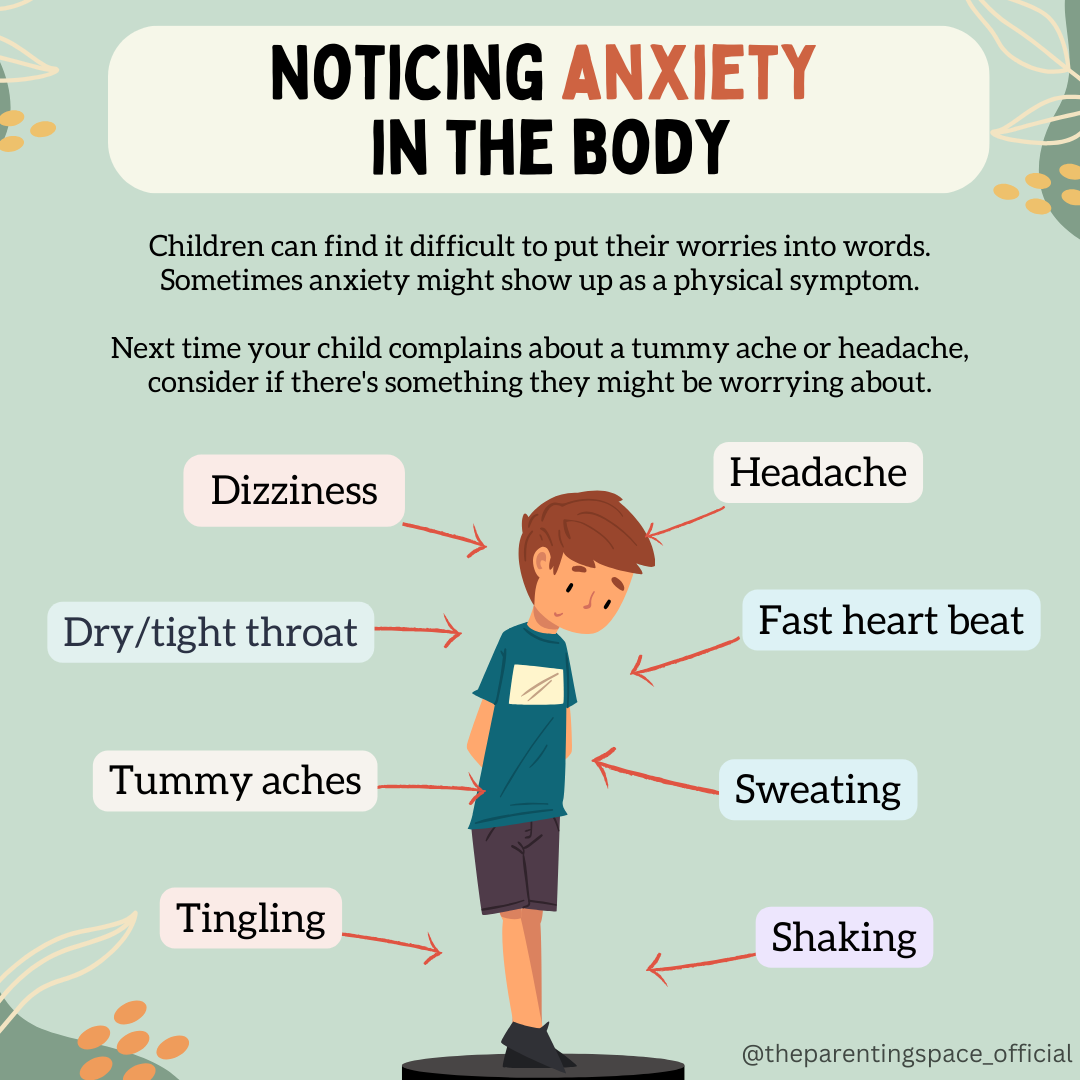
Noticing anxiety in the body

Anxiety can show up as physical symptoms in the body. If your child is complaining of a stomach ache or headache, remember to consider whether anxiety may be part of the underlying cause.

Anxiety can show up as physical symptoms in the body. If your child is complaining of a stomach ache or headache, remember to consider whether anxiety may be part of the underlying cause.

Annie (practitioner)

Naming feelings

Supporting your child to notice and name their emotions can be a great way to help calm a difficult situation.

Supporting your child to notice and name their emotions can be a great way to help calm a difficult situation.

Annie (practitioner)

Listening

Parents, showing active listening through your body language and reflective language allows your child to feel heard and valued.

Parents, showing active listening through your body language and reflective language allows your child to feel heard and valued.

Annie (practitioner)

Helping your child to problem solve

Problem solving together can build your child’s confidence and helps them to feel more in control.

Problem solving together can build your child’s confidence and helps them to feel more in control.

Ruby (practitioner)

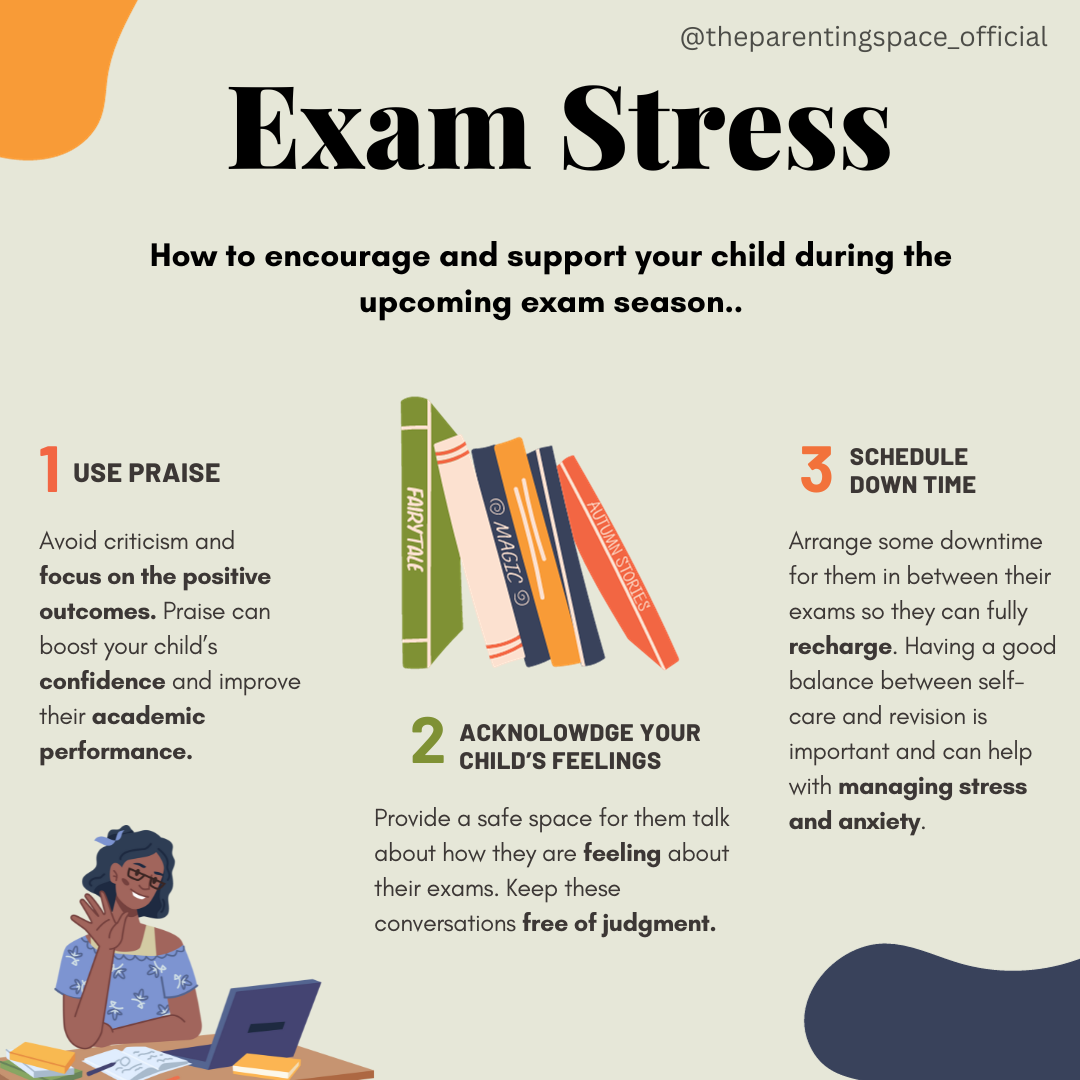
Exam Stress

As parents we want the best for our child, here are some ways you can support and encourage your child during the exam season.

As parents we want the best for our child, here are some ways you can support and encourage your child during the exam season.

Emelia (Parent)

Denying Feelings

Parents, help your child to feel heard, by accepting and acknowledging their feelings.

Parents, help your child to feel heard, by accepting and acknowledging their feelings.

Ruby (practitioner)

Building connection

Parents, remember that the quality of time spent together is more important than the quantity.

Parents, remember that the quality of time spent together is more important than the quantity.

Annie (practitioner)