Navigating the Hitting Phase

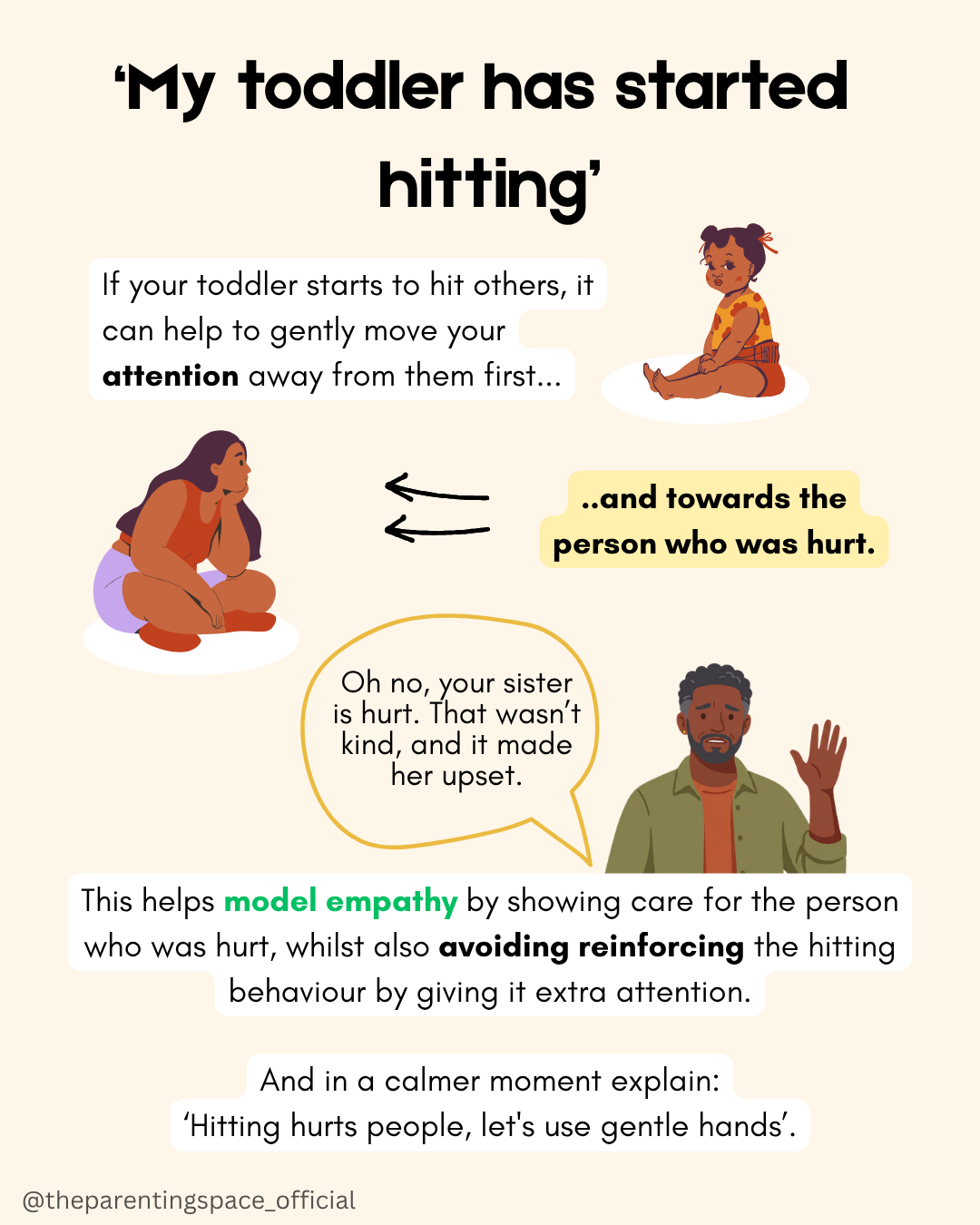
If your toddler starts hitting, try focusing first on the person who was hurt rather than the hitting behaviour. Acknowledge their feelings with comments like “Your sister is hurt and feeling upset,” which helps model empathy and avoids giving extra attention to the behaviour. Later, when your child is calm, gently explain that hitting hurts people and encourage the use of gentle hands instead.

If your toddler starts hitting, try focusing first on the person who was hurt rather than the hitting behaviour. Acknowledge their feelings with comments like “Your sister is hurt and feeling upset,” which helps model empathy and avoids giving extra attention to the behaviour. Later, when your child is calm, gently explain that hitting hurts people and encourage the use of gentle hands instead.
Annie (practitioner)

Wash worries away exercise

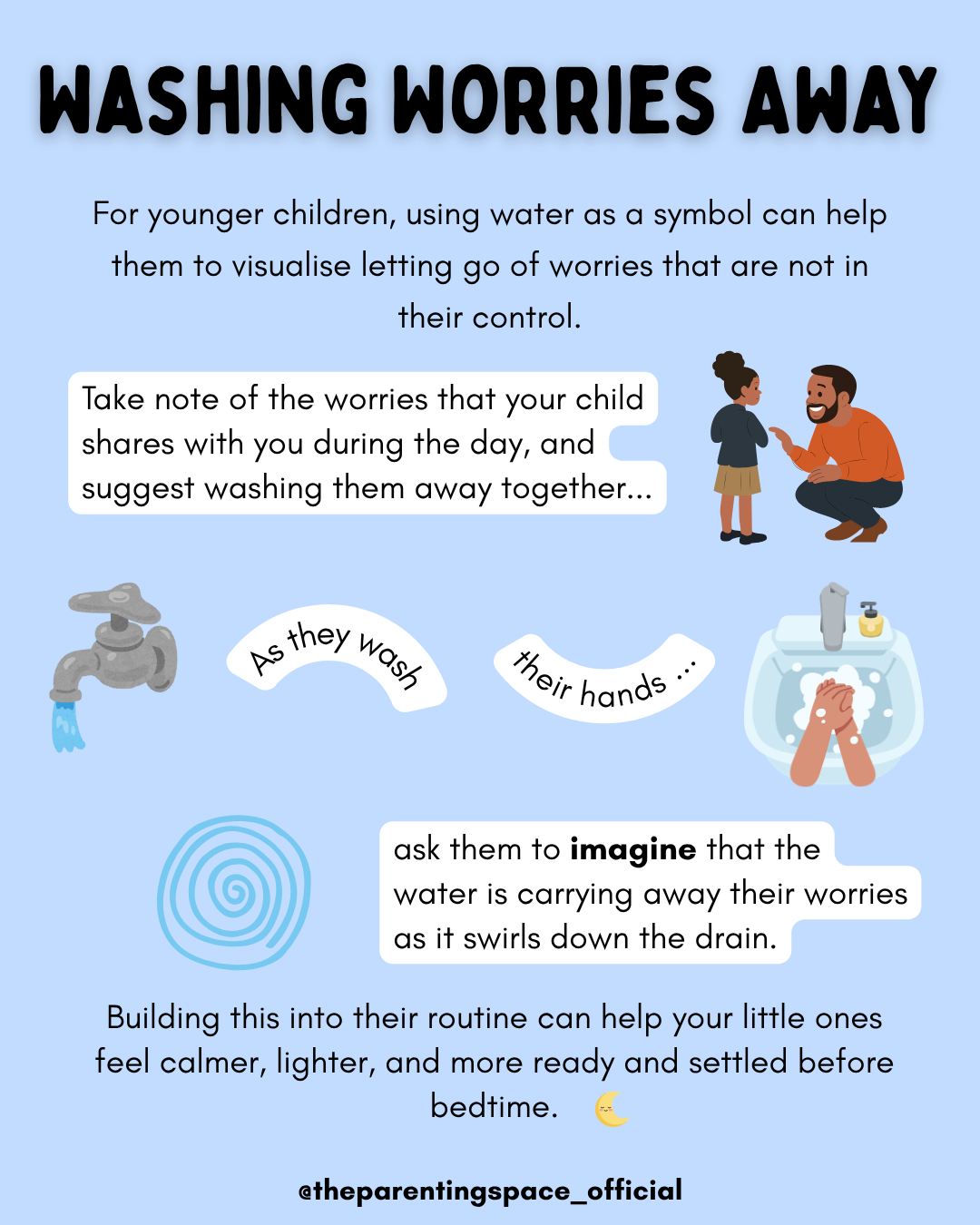
For younger children, using water as a symbol can help them let go of worries that are outside their control. If your child shares a worry during the day, encourage them to imagine washing it away while they wash their hands, picturing the water carrying it down the drain. Making this part of their routine can help children feel calmer, lighter, and more settled before bedtime.

For younger children, using water as a symbol can help them let go of worries that are outside their control. If your child shares a worry during the day, encourage them to imagine washing it away while they wash their hands, picturing the water carrying it down the drain. Making this part of their routine can help children feel calmer, lighter, and more settled before bedtime.

Annie (practitioner)

Making time for self care

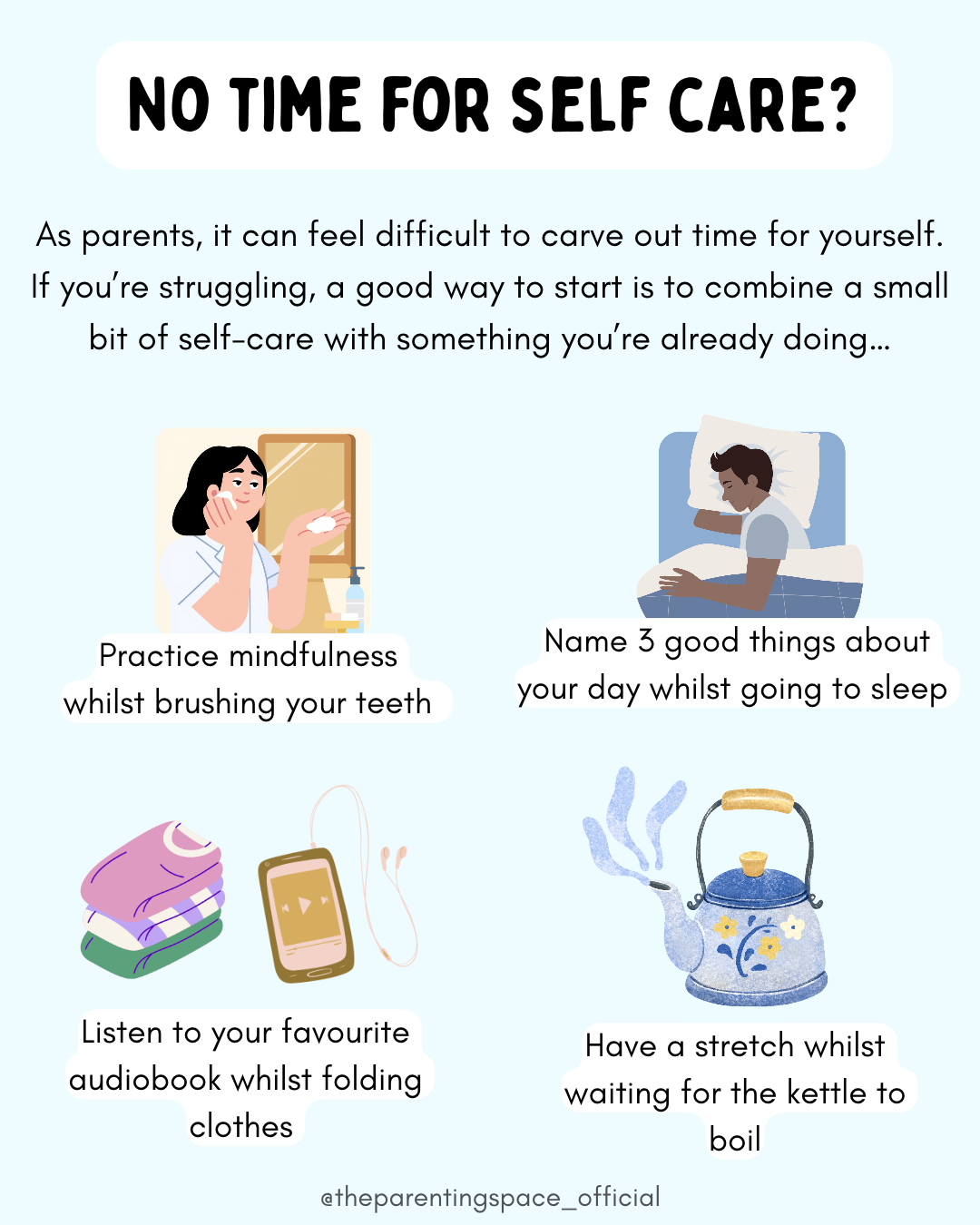
Finding time for self-care as a parent can be challenging. A simple way to start is by building small moments of self-care into everyday routines, such as practising mindfulness while brushing your teeth, reflecting on three positive things from your day before bed, listening to an audiobook while doing chores, or stretching while waiting for the kettle to boil.

Finding time for self-care as a parent can be challenging. A simple way to start is by building small moments of self-care into everyday routines, such as practising mindfulness while brushing your teeth, reflecting on three positive things from your day before bed, listening to an audiobook while doing chores, or stretching while waiting for the kettle to boil.

Annie (practitioner)

Preparing your child for the exam season

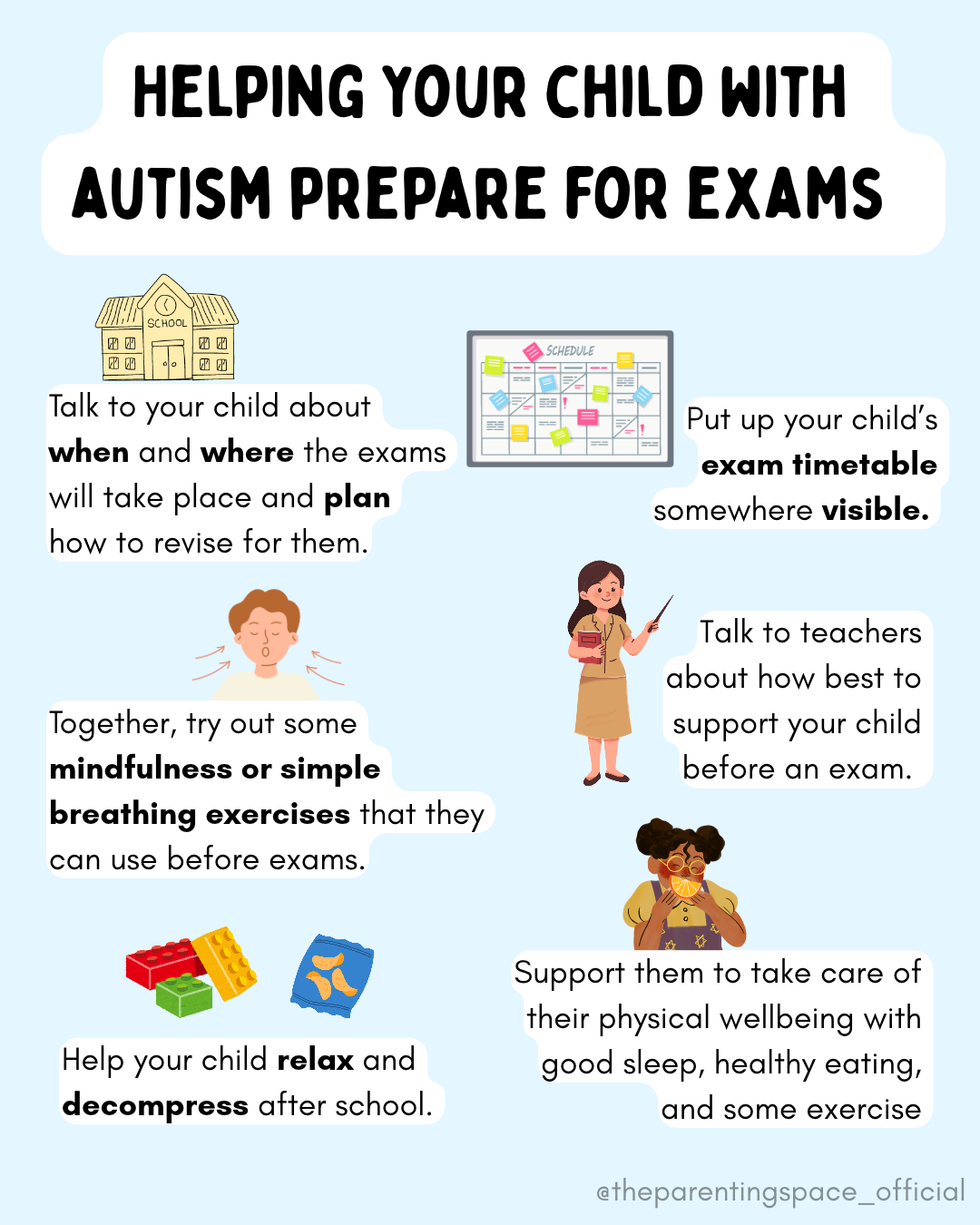
Help your child with autism prepare for exams by talking about when and where exams will take place, creating a revision plan, and displaying their timetable somewhere visible. Practise simple mindfulness or breathing exercises together, work with teachers to identify helpful support, and encourage time to relax after school. Good sleep, healthy eating, and regular exercise can also support their wellbeing during exam periods.

Help your child with autism prepare for exams by talking about when and where exams will take place, creating a revision plan, and displaying their timetable somewhere visible. Practise simple mindfulness or breathing exercises together, work with teachers to identify helpful support, and encourage time to relax after school. Good sleep, healthy eating, and regular exercise can also support their wellbeing during exam periods.

Annie (practitioner)