
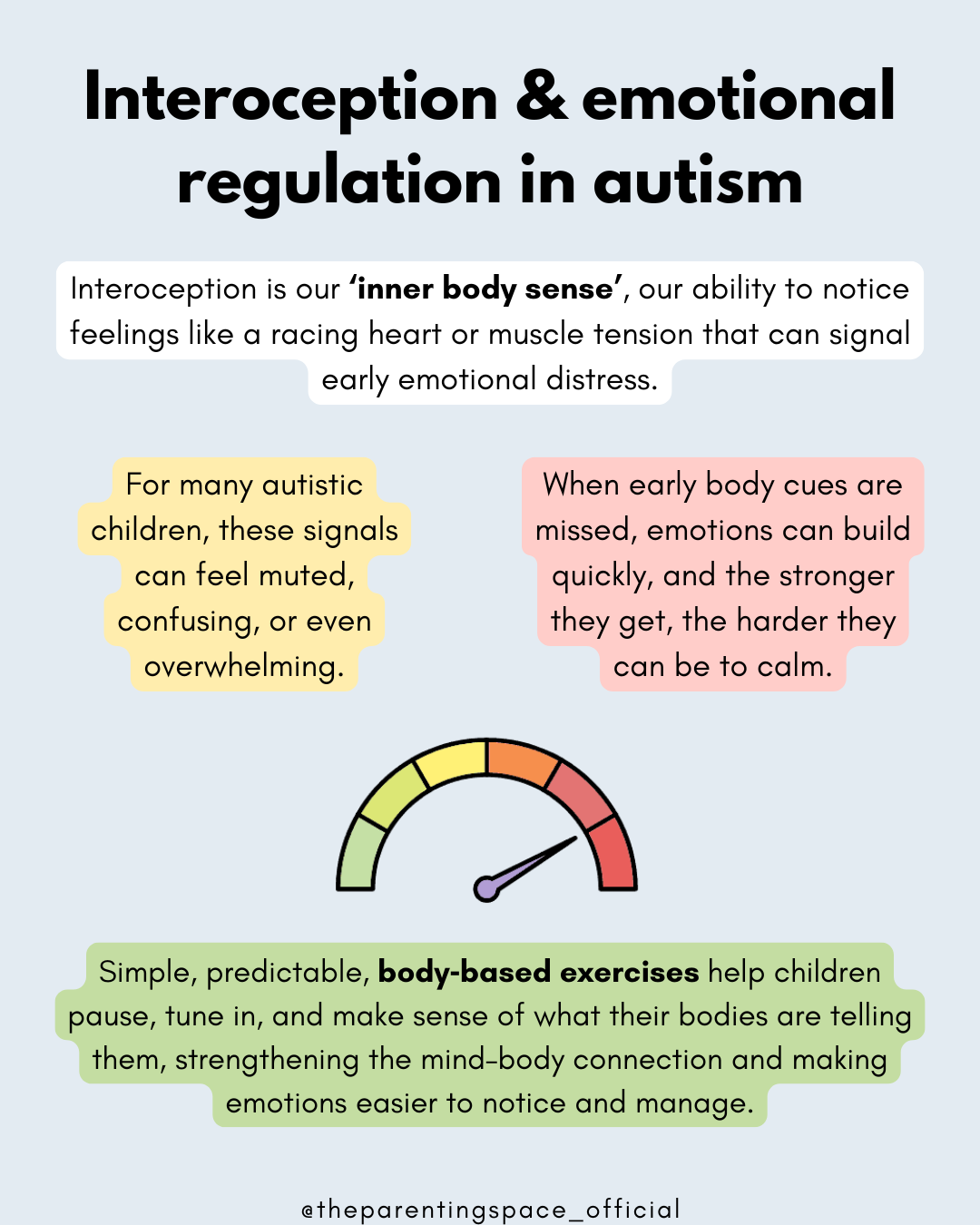
Interoception & emotional regulation in autism

Interoception is the ability to notice and respond to signals from inside our bodies, such as hunger, tiredness, or stress. Recognising these body cues helps us understand how we are feeling and take action, like eating when we are hungry or resting when we are tired. Developing interoception can support emotional awareness and self-regulation.

Interoception is the ability to notice and respond to signals from inside our bodies, such as hunger, tiredness, or stress. Recognising these body cues helps us understand how we are feeling and take action, like eating when we are hungry or resting when we are tired. Developing interoception can support emotional awareness and self-regulation.

Annie (practitioner)

Descriptive commenting during play

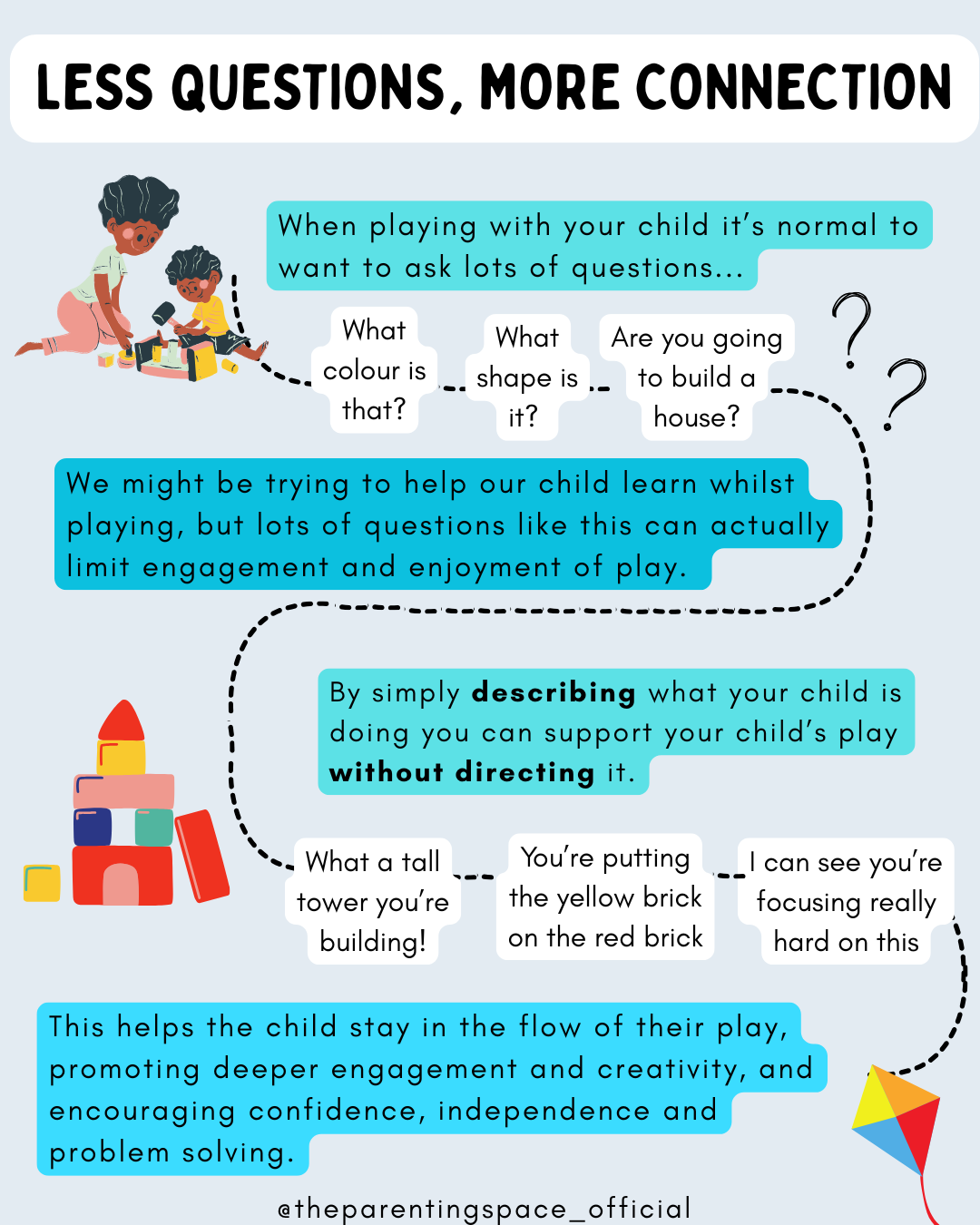
When playing with your child, it’s natural to ask lots of questions. But lots of questions can interrupt play and engagement. Instead, try describing what your child is doing, such as “You’re building a very tall tower” or “You’re carefully placing the yellow brick on top.” This supports creativity, confidence, independence and problem-solving while helping children stay focused and enjoy their play.

When playing with your child, it’s natural to ask lots of questions. But lots of questions can interrupt play and engagement. Instead, try describing what your child is doing, such as “You’re building a very tall tower” or “You’re carefully placing the yellow brick on top.” This supports creativity, confidence, independence and problem-solving while helping children stay focused and enjoy their play.

Parent